
How to ensure children’s online safety? 4 Inconvenient thruths you won’t find in a smartphone manual
We naturally think of cybersecurity in technical terms: comples passwords, taped-over webcams, and antivirus software. Meanwhile, the latest data from NASK sounds the alarm in a completely different area – the social one. As many as 82% of children receive a smartphone before their 11th birthday, entering a world where the boundaries between curiosity and danger are very fragile.
The challenge today is no longer just protecting the device from a virus, but protecting the mind from manipulation. Here are conclusions about modern threats that update the definition of being “cyber-prudent”.
1. Trolling and disinformation are not a joke, but psychological warfare
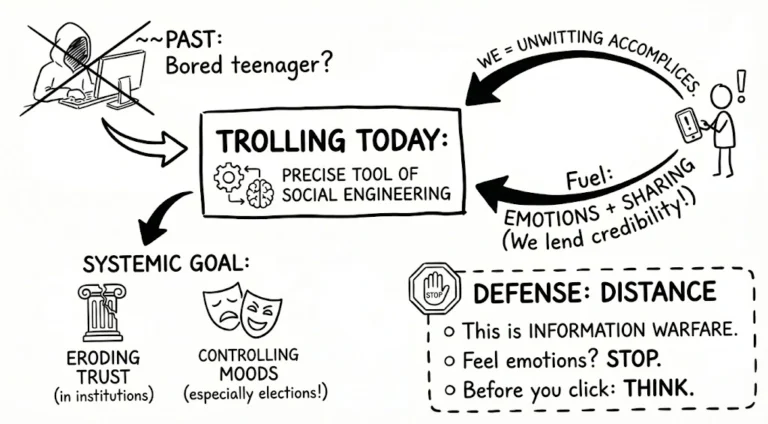
We have grown accustomed to thinking of internet trolls bored teenagers seeking attention. This is an outdated image. Today’s trolling has evolved into a precise tool of social engineering. It is no longer just about provoking a fight, but about systematically undermining trust in institutions and steering public sentiment – especailly during election periods.
“I have the impression that trolling today is already an element of political warfare… When we see such fake news, often riding the wave of the emotions they evoke in us, we share them, and that is when they gain credibility.” (Marta Siekacz)
The greatest danger? We become unwitting accomplices of trolls when we share unverified but emotionally charged content. We give anonymous manipulations the face of a trusted friend or family member.
Understanding that trolling is an element of information warfare, and not just “spitefulness”, allows us to gain some distance. Before you click “share” under the influence of emotions, stop and think.
2. Grooming and sexting: innocent curiosity vs. children's online safety
This is one of the most shocking paradoxes of children’s online safety. We often assume that victims of grooming (online seduction) or sexting or disobedient. The thruth is different: the are simply naturally curious about the world.
“Children do not understand what they have received. They got something they didn’t really want, but it is interesting… Such natural curiosity can cause them to start talking to the sender of this message.” (Marta Siekacz)
Children have an innate need to explore. When they receive unsolicited, inimate content, their reaction is rarely an immediate escape – more often it is consternation mixed with curiosity. Perpetrators know this perfectly well, initiating “nice” contact that lulls vigilance. A child often does not understand that they are being harmed until thet grow up and gain perspective.
This is not the child’s fault. It is lack of adult control over what the child does and who they meet online. Education cannot rely on fear-mongering, but on explaining the mechanisms of manipulation.
3. Scrolling before sleep is the slow "pollution" of the brain
Digital hygiene is not just a matter of tired eyes. It is a neurobiological issue. During sleep, our brain undergoes processes of “cleansing” from toxins accumulated during the day.
Stealing time meant for sleep through late-night scrolling of social media is not just about sleep deprivation. Experts are beginning to link chronic sleep deprivation and overstimulation with the risk of an epidemic of dementia-related diseases in the future. Your smartphone in the bedroom may literally be blocking the regeneration of your mind
“In the future, we will face an epidemic of dementia diseases because the brain simply has no time to cleanse itself. It cleanses during sleep, and we do not sleep at night; instead, we scroll.” (Marta Siekacz)
This changes the narrative from “put down the phone because you won’t be able to get up in the morning” to “put down the phone to protect your brain in your old age”.
4. The relationship is stronger than parental controls
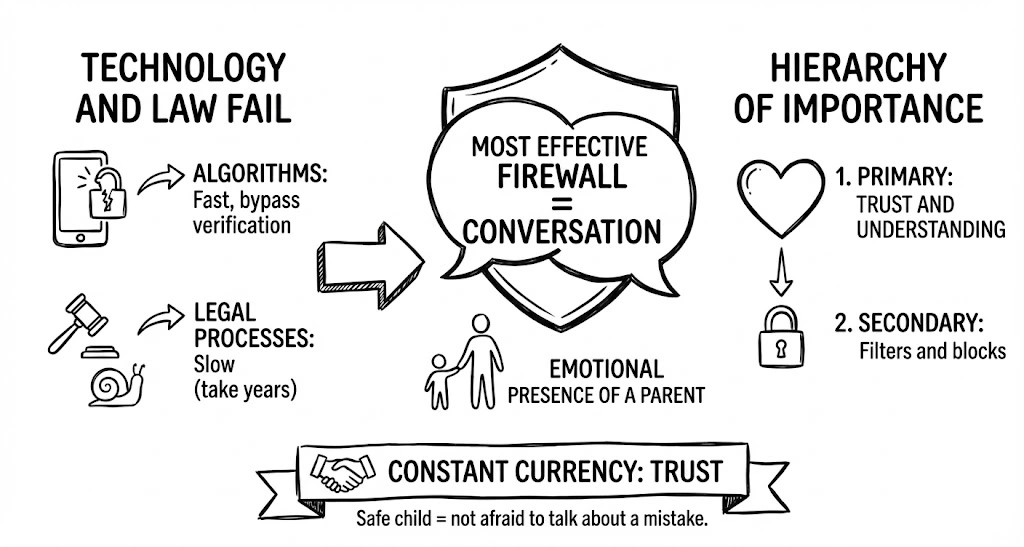
In a world where TikTok algorithms can bypass age verification and serve harmfull content in minutes, technological barriers are insufficient to ensure full online safety for children. The city of New York is suing tech giants, but lawsuits take years.
“A child’s digital safety begins with emotional presence and conversation, not just filters and controls.” (Marta Siekacz)
The most effective “firewall” turn out to be… conversation. The rule is simple: filters and blocks are secondary. The emotional presence of the parent is primary. A child who understands why certain content is bad and feels they can safely tell a parent about a mistake is safer that one with the most secured phone.
Technology changes, but trust remain the constant currency in building online safety.
A reflection for the future
It is not about demonizing technology – it is essential for future generations for learning and living. It is about transitioning from being a passive consumer of content to being a conscious user. Regardless of whether you are 10 or 40 years old, the rule is the same: your attention and you emotions are the most valuable resource on the internet. Do not give them away for free.
What can you do today to improve children’s online safety (and your own)? Start with a small step towards digital hygiene: take your phone out of the bedroom for the next 3 nights. See how the quality of your sleep and your morning mental clarity will change.
You can listen to the full interview on Radio Zachód by clicking here.
Looking to enhance your cybersecurity?
Contact us!
Leave your details – we’ll call you back
Our specialist will get back to you no later than the next business day. You don’t have to fill in the message field, but a brief note about the topic you’re interested in will be a valuable hint for us.