Jak wygląda praca analityka w Security Operations Center (SOC)?
·

What does the work of an analyst in a Security Operations Center (SOC) look like?

A cyberattack rerely begins with a loud alarm, encrypted files, or a ransom note – this is not a movie script. An attacker may perform a single action, wait a few days, and then take the next step. Such operations unfold over weeks or months, and each individual event can resemble normal user or administrator activity.

The job of SOC analysts is to receive alerts generated by security systems, while also connecting events originating from different sources, assessing their context, and recognizing patterns that may indicate an evolving cyberattack.

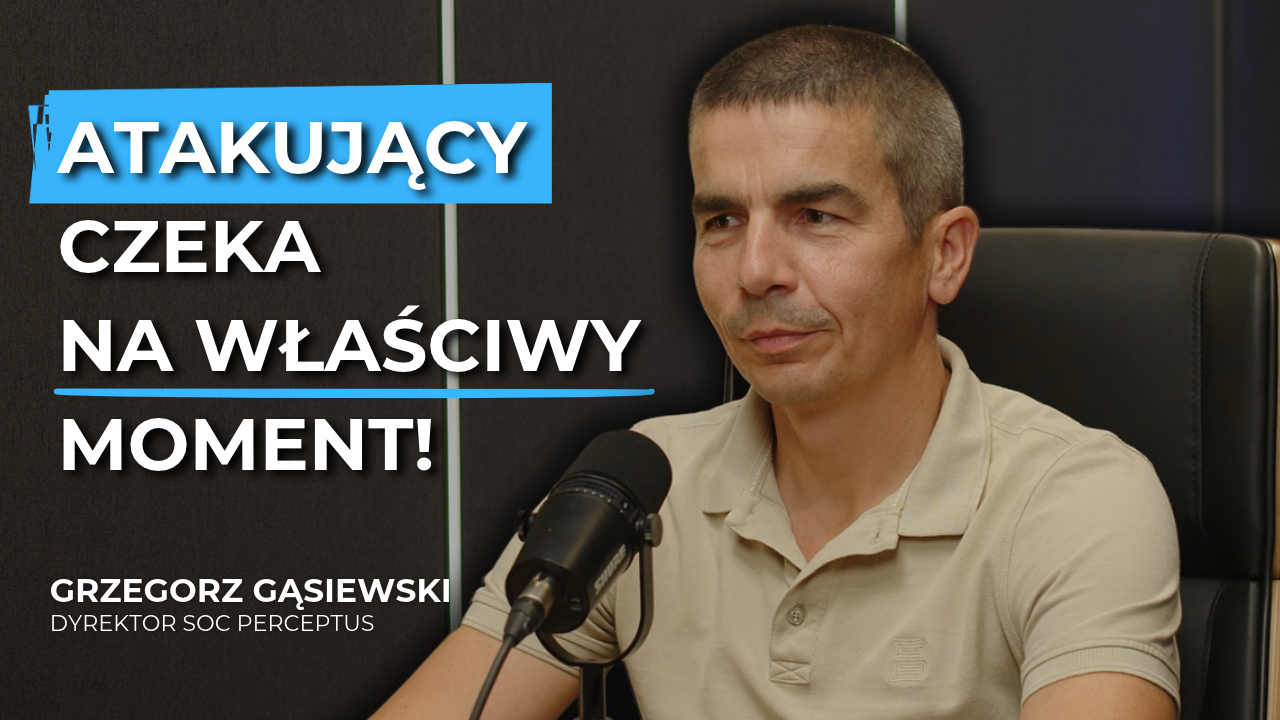
Grzegorz Gąsiewski, Director of the SOC Department at Perceptus, shares his perspective on daily work in a Security Operations Center in a conversation with Przemysław Sobczyk, Technical Department Director, in the fourth episode of the cybersecurity podcast.

Why does a SOC monitor infrastructure around the clock?

Suspicious activity is morely likely to appear at night, over the weekend, or on a holiday –  precisely when the administrator responsible for the infrastructure is most likely unavailable.

The SOC team monitors the client’s environment 24 hours a day, 7 days a week. Individual shifts hand over information to one another regarding ongoing observations and events that have not yet been definitively resolved.
„It doesn't matter whether it's a holiday, vacation, or nighttime. We feel a sense of responsibility. That is our role.”

Grzegorz Gąsiewski
Director of the SOC Perceptus

Continous monitoring is also crucial because a single alert does not always make it possible to determine whether an organization is dealing with an actual incident. A medium-priority event may not require immediate intervention, but its significance changes if related activities appear a few hours later.

Log completeness determies threat visibility

Imagine an organization with 100 monitored devices. If system logs only flow in from 50 of them, coverage is 50%. The team may know about the existence of the remaining computers because their activity is visible on the firewall or in the XDR system. However, they do not have a complete picture of what is happening directly within their operating systems.
All devices in the organization
Covered by monitoring 50%

When suspicious communication originates from one of those inmonitored devices, an analyst may be unable to verify:

  • who was logged in at the time,
  • which processes were launched,
  • what commands the user executed,
  • whether similar events had occured previously,
  • what preceded the detected activity,
  • whether the device’s behavior deviated from its usual operation.

In such cases, the SOC sees that a security system detected an event, yet has diminished capacity to verify its source, progression, and potential consequences.

Checking data completeness is a continous part of the monitoring team’s work. Log sources can stop functioning after an update, a configure change, a device failure, or an infrastructure modification. Therefore, their availability should not be verified solely during the service implementation phase.

How does MITRE ATT&CK help evaluate a potential cyberattack?

To organize observed activities, analysts can map them against known attacker tactics and techniques. One of the primary knowledge bases used for this purpose is MITRE ATT&CK.

The framework allows detected behavior to be assigned to a specific stage of an attack.

MITRE ATT&CK does not make decisions for the analyst, but it helps answer key questions:

  • what attack technique might the event be associated with,
  • what stage of a potential attack it is at,
  • what subsequent actions the attacker might take,
  • what additional activities should be searched for in the logs.

The specific asset on which the event was recorded also matters. Suspicious activity on a standard workstation is significant because that user may become the initial entry point into the organization. However, similar activity on a domain controller, backup server, or a system responsible for critical processes may require an even higher priority.

A cyberattack can develop over weeks

Sudden, aggressive actions increase the risk of detection. A cybercriminal looking to achieve their objective – especially in the early stages – cannot act in haste.
„Attackers don't do everything at once. They perform one action, wait a few days, then do the next. Such a cyberattack lasts several weeks or several months because someone is trying very carefully to remain unnoticed.”
Grzegorz Gąsiewski
Director of the SOC Perceptus

Spreading actions over time makes recognizing an incident more difficult. A single event may not look dangerous, but connecting it with activities recorded several day or weeks earlier reveals a suspicious pattern.

A SOC needs not only real-time alerts, but also historical data and the capability to correlate information originating from diverse systems.

Incident response cannot paralyze the organization

Rapid response is vital, but it does not always mean immediately shutting down a system. A SOC analyst may not know the full business context of the device subject to an alert.

A server might support a patient registration system in hospital, a production line, a core sales application, logistics processes, an accounting system…

Jak wygląda praca analityka w Security Operations Center (SOC)?

Disconnecting it may curb the attacker’s actions, but it can also bring the organization’s operations to a halt. Moreover, upon analysis, it may turn out that the alert was a false positive or that the suspicious activity did not require imeediate isolation.

This does not mean response should be delayed despite a confirmed threat. However, the decision must weight both the level of risk and the business consequences. Such an evaluation requires collaboration between analysts and an administrator who understands the specific role of that asset within the organization.

Technology will not tame chaos

Organizations often try to increase their security posture by purchasing additional tools. A new solution will not eliminate problems stemming from a lack of control over the infrastructure.

Organizing assets, accounts, and permissions not only helps prevent attacks. It also enables faster event analysis, because it is clear who should be using a given system, which processes are running on it, and which behaviors trurly deviate from the norm.
 
Organizacje często próbują zwiększać poziom bezpieczeństwa przez zakup kolejnych narzędzi. Nowe rozwiązanie nie usunie problemów wynikających z braku kontroli nad infrastrukturą.


Uporządkowanie zasobów, kont i uprawnień ułatwia nie tylko zapobieganie atakom. Pozwala również szybciej analizować zdarzenia, ponieważ wiadomo, kto powinien korzystać z danego systemu, jakie procesy są w nim uruchomione i które zachowania rzeczywiście odbiegają od normy.

Looking to enhance your cybersecurity?

Contact us!

Leave your details – we’ll call you back

Our specialist will get back to you no later than the next business day. You don’t have to fill in the message field, but a brief note about the topic you’re interested in will be a valuable hint for us.


Related posts